
Insights & Intelligence
Explore trends, thought leadership, and dealmaking perspectives across Asia’s private markets. Stay ahead with expert commentary, data-driven research, and strategic investor viewpoints.
Global Macro Update: Trade Tensions and Fed Uncertainty Continue to Drive Markets
25 July 2025
Global markets remain focused on US trade negotiations and the potential for monetary easing, as escalating tariffs and central bank independence concerns cloud the economic outlook.
US Trade Pressures and Fed Probe
The Trump administration has intensified pressure on Federal Reserve Chair Jerome Powell, launching a high-profile probe into a USD 2.5bn refurbishment project at the Federal Reserve Headquarters. Markets view this move with suspicion, raising concerns about potential political interference in the Fed’s operations.
At the same time, US trade talks are approaching a key 1 August deadline. Negotiations with Japan have shown encouraging progress, but discussions with Indonesia and the Philippines remain unsettled. Market participants now expect a 15% tariff deadlock between the US and EU unless common ground is reached. Reports indicate the European Union is prepared to hit USD 17bn worth of US goods with 30% tariffs if a resolution is not achieved.
Asia Faces Mixed Signals
In Asia, Taiwan’s economy remains vulnerable as reciprocal tariffs and semiconductor sector weakness weigh on growth and inflation. Malaysia’s central bank cut its Overnight Policy Rate by 25 basis points to 2.75% and signaled further easing by year-end, in a bid to support the economy against external tariff shocks.
Labour Market Softness Adds Complexity
While the US economy is growing at a rate of over 2%, labour market indicators show signs of cooling. Jobless claims have trended lower, but private sector hiring remains on the softer side, and wage growth has slowed. The market is closely watching July payroll data, with consensus estimates for a drop to 118k from 147k in June.
Investor Implications
Sticky inflation in the 2.5–3% range combined with weaker labour market data could force the Fed to act more decisively. Market consensus is building for two rate cuts in the second half of 2025 if economic data confirms this softening trend.
For Asia, the combination of tariff uncertainty and monetary easing is expected to influence capital flows and deal momentum for the remainder of the year. Investors should watch central bank signals in Malaysia, Singapore, and Taiwan, as well as any breakthroughs in US trade negotiations, which remain the dominant driver of global risk sentiment.
DealBook Insight
Trade policy and central bank independence are emerging as key market themes heading into August. Investors should prioritize resilient, cash-flow-driven assets and maintain diversified exposure across geographies as volatility remains elevated.

Liquidity Meets Strategy: Private Capital Reshapes Amid Global Shifts
• LPs borrow against PE stakes
• KKR & Capital Group deploy new funds
• TWG commits $2.5B to Mubadala
• Sri Lanka recovery gains traction
• Tariff shocks ripple across Asia
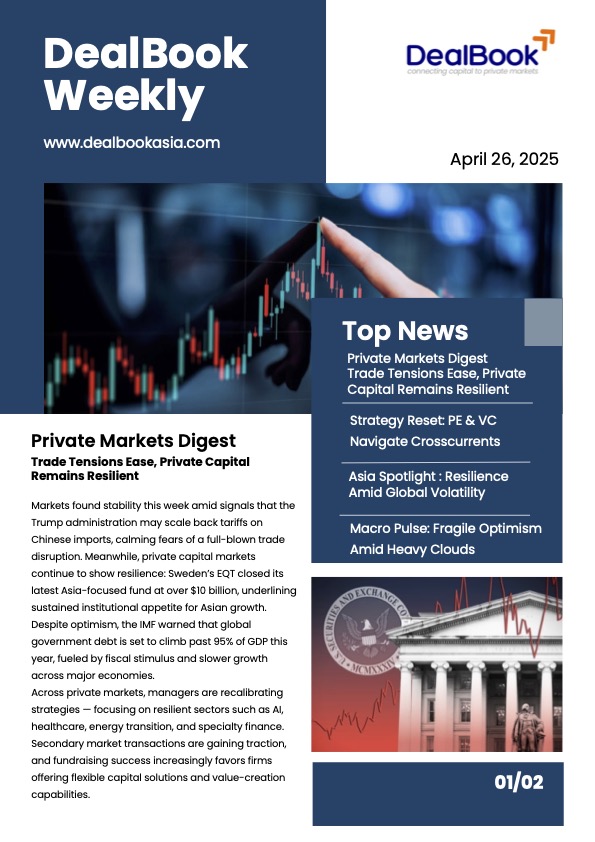
Strategy Reset: Private Markets Navigate Crosscurrents
• EQT closes $10.3B Asia fund
• Focus on AI, healthcare, energy
• Secondaries reshape exits
• Inflation cools in Singapore
• Structure-led strategies dominate
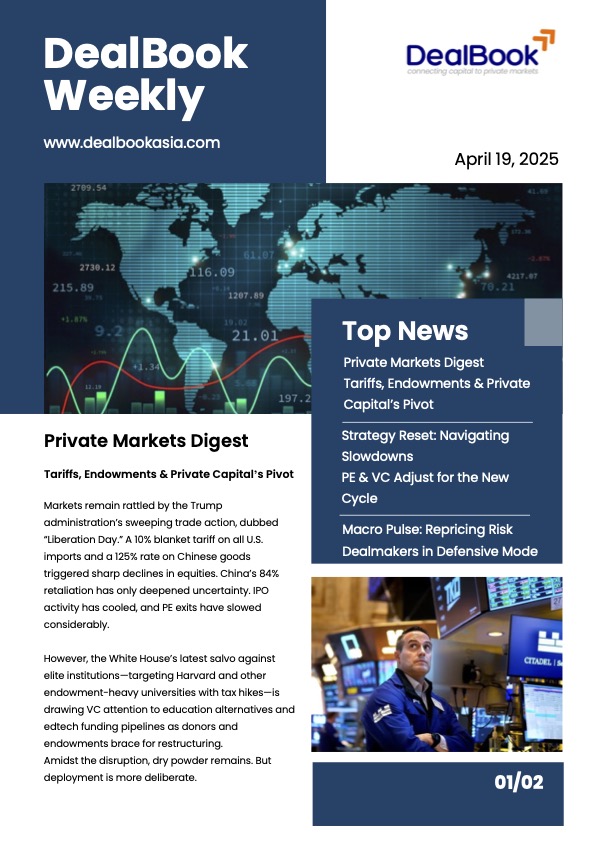
April Market Signals: Tariffs, Capital Pivots & Defensive PE Moves
• Tariffs shake U.S.–China flows
• Endowment tax changes
• GPs reprice risk
• Defensive VC and PE
• Rise of structured equity
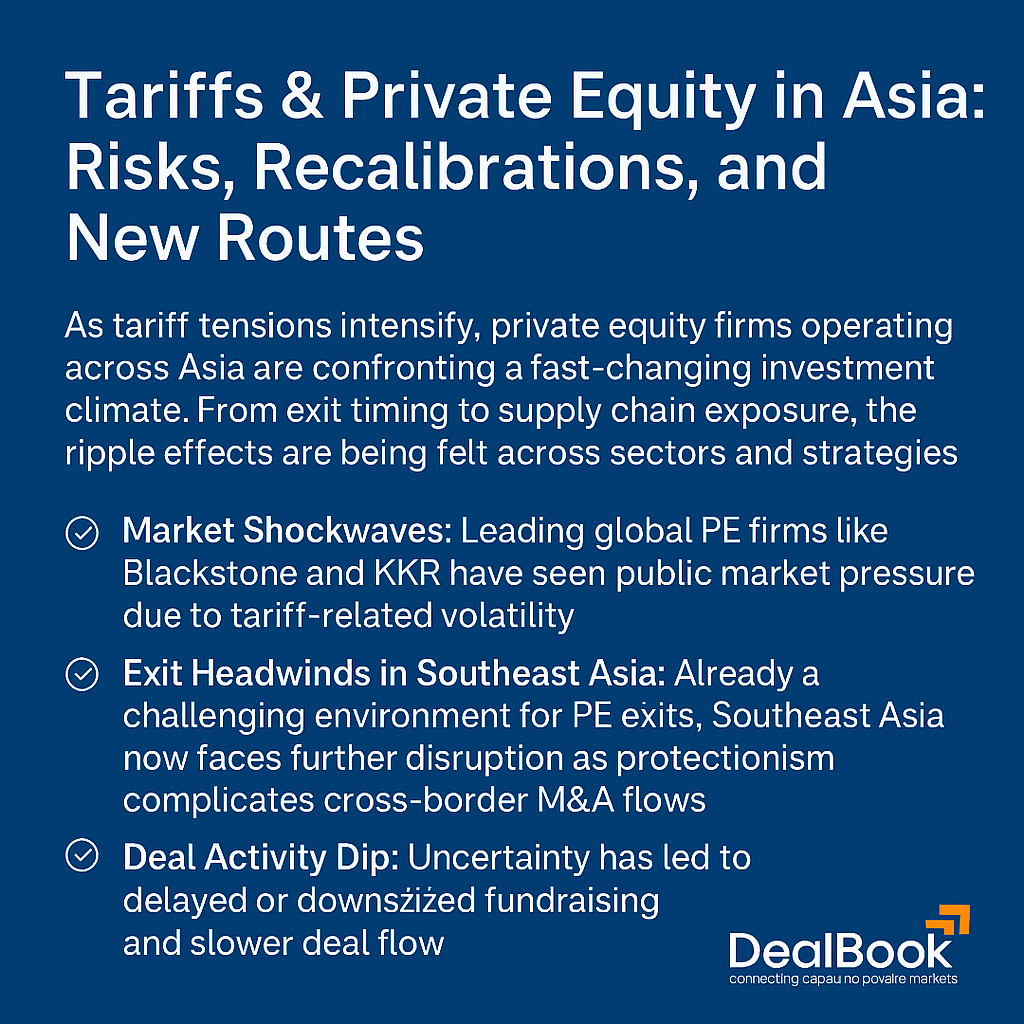
Tariffs & Private Equity in Asia
Trade tensions are reshaping Asia’s investment climate. PE firms rethink exits, sectors, and strategy in response to rising tariffs.
Asia Private Capital: Mid-Year Outlook
Capital flow trends and strategy shifts from LPs and GPs across the region as 2025 unfolds.
🔗 View on LinkedInRethinking Exits in Asian PE
Private equity firms explore secondaries, roll-ups, and revenue-share deals to unlock liquidity in uncertain markets.
🔗 View on LinkedInESG in Action: What LPs Expect in 2025
Institutional investors raise the bar on transparency, climate metrics, and long-term stakeholder alignment.
🔗 View on LinkedIn

 Welcome to DealBook